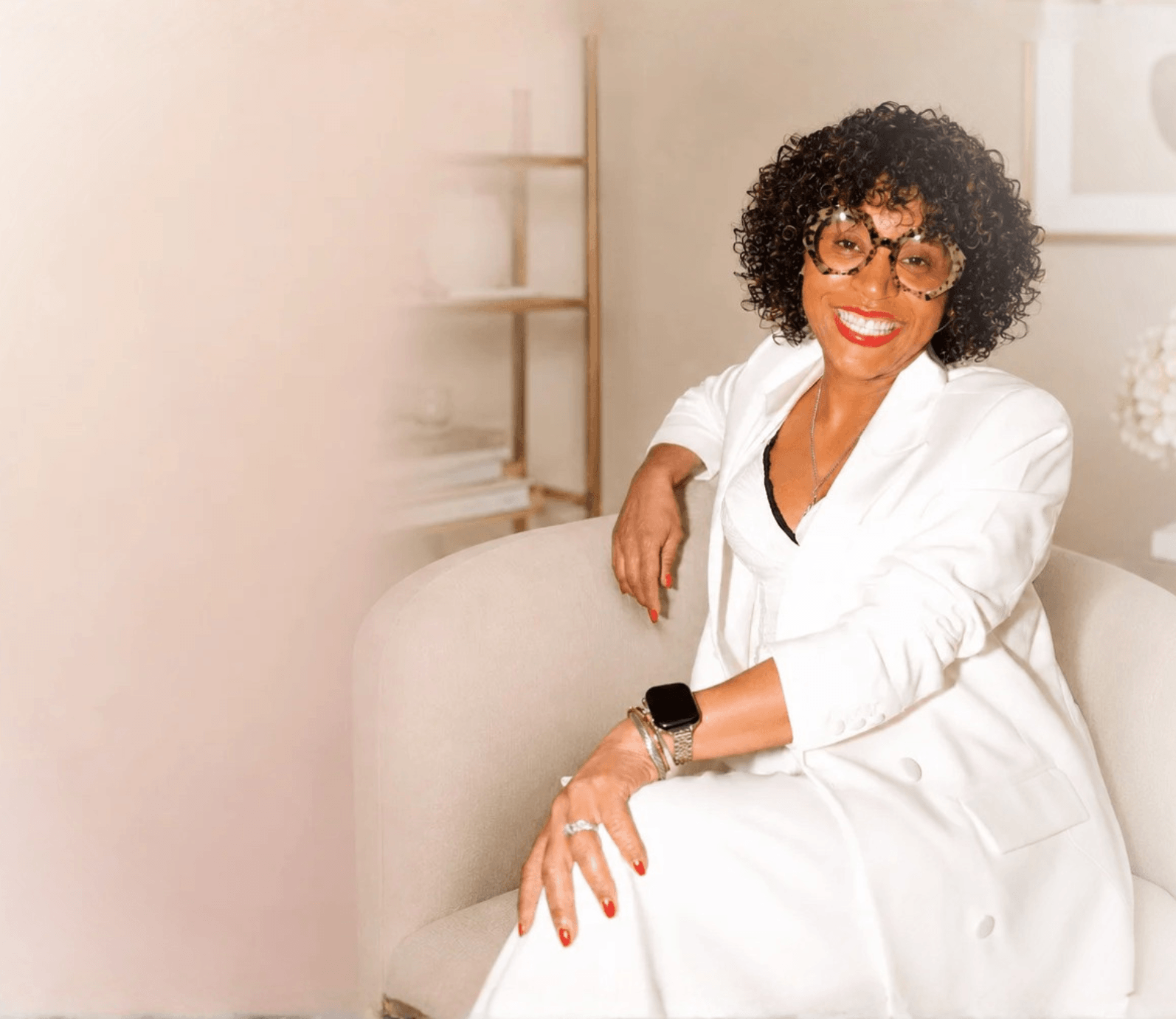
There is a particular kind of tired that does not announce itself as crisis. It is quieter than that. It looks like functioning.
For years, this is what my life looked like: answering the email with a polite tone even though my chest throbbed with tension. Moving through my days while my nervous system screamed for rest. Managing the household, the work, the relationships, the details that no one else seemed to notice. I told myself this was the cost of being sharp, needed, dependable.
But my body was keeping different receipts.
The Invisible Exhaustion
Nothing looked broken from the outside. That was the danger. When you're still performing, hitting deadlines, and holding space for others, it's easy to ignore the quiet ways you are actually falling apart. I was not having a crisis. I was having erosion. Slow. Steady. Hidden.
The life you once prayed for may be standing all around you. The home. The work. The family. The business. The stability. The calendar full of evidence that you are needed, capable, and still very much in motion. And yet, somewhere underneath all of that motion, a woman inside is asking a quieter question.
When do I get to enjoy my own life?
Not perform gratitude for it. Not maintain it. Not manage it so well that everyone else can relax inside it. Actually enjoy it. There is a difference between these things, and I had lost track of it years ago.
Management requires attention. Enjoyment requires presence. And after decades of becoming fluent in responsibility, presence felt almost indulgent. You can know every moving part of a household, a team, a marriage, a business, a family system, and still lose contact with the woman living inside the life.
The Cost of Being Strong
For most of my life, strength was the only available language. Strength kept things from collapsing. It made me employable, reliable, respectable, trusted. It helped me walk through rooms where tenderness was not always safe. Strength helped me raise children, build careers, survive endings, recover from disappointments, and begin again when no one saw the weight of the beginning.
So no, I do not demonize the rock here. The rock was necessary. The rock protected me. The rock got me through.
But what happens when the identity that helped you survive becomes the identity that keeps you from living? What happens when everyone knows you can handle it, so they stop asking whether you should have to? What happens when being dependable becomes a place you disappear?
My mother self-sacrificed and put everyone's needs before her own. My grandmother zipped around all day, proudly declaring, "I can do for myself." They pushed through grief and exhaustion because survival demanded it. They did not rest when they were tired. They rested when the work was done. And the work was never done.
This was the inheritance I received. Not money or property, but a blueprint for how to move through the world as a Strong Black Woman. So I did not question it. I absorbed it. My shoulders crept toward my ears, perpetually braced for impact. My breath grew shallow. My mind refused to rest. My body felt heavier than it ever had, not just in weight but in burden.
Without realizing it, I had signed an invisible contract written in my ancestors' survival: Be strong. No rest. No softness. No pause. Push. Endure. Disappear into duty. If you break, do it quietly. Privately. Quickly.
When My Body Said No
I thought I could keep going. I believed my body would keep cooperating with a contract I never consciously agreed to.
I was wrong.
The scream did not come during a crisis or deadline. There was no emergency. I was home, sitting at my computer on an ordinary Tuesday afternoon, when the tightness in my chest became unbearable. And then, without warning or permission, a sound tore out of me.
That scream was a somatic release years in the making.
The first one came loud and sharp. The second, louder and longer. The third was the most raw, the most guttural, the most honest sound I had ever made. It surprised me. Yet it felt ancient. Not dictated by thought or composure or the need to make others comfortable. This was my body informing me, in no uncertain terms, that she would no longer be ignored.
The screams were followed by sobs. Deep, grief-stricken, whole-body sobs that felt somatic and liberating. As if my nervous system was no longer waiting for my permission to release what I had been holding. She was simply telling me: No more.
When the sobs finally quieted, I looked at myself in the mirror. The woman staring back at me had soft eyes. A face that looked familiar but somehow forgotten. She looked like me, but younger. Gentler. Less defended. This was the woman underneath the armor. The one who had been buried under years of performing, proving, protecting. And she was exhausted.
That moment changed me. Because I realized the pressure had not started that Tuesday. It had been building quietly for years. Decades, maybe. Through every "I'm fine" I did not mean. Through every boundary I did not set. Through every rest I postponed until the work was done.
The Return Begins
Here is what I learned in the days that followed: strength is our conditioning, not our identity. We are praised for resilience, for our ability to do so much with so little, to manage it all, to overcome, to exceed limitations, to break barriers, to become first, to carry everyone, to never complain.
We have made "strong" our identity as if it is a title we earned. We are called strong so often that we confuse it with being well. But strength without regulation is just survival. And our bodies keep the receipts of every moment we chose performing over healing.
That woman with the soft eyes looking back at me wanted what every woman deserves: the chance to exist without constantly bracing, to breathe without holding, to rest without earning it first. And that permission changed everything.
BLOOM with Quadia exists for her. Not as a rescue mission. Not as another improvement plan. Not as one more place where a woman is told to optimize herself into worthiness. BLOOM is a lifestyle digital boutique for Black women entering life after survival.
It is for the woman who has been strong long enough to know that strength alone is not a life. It is for the woman who is ready to return to herself through body, style, real rest, confidence, and reinvention. And return is the right word, because this is not about becoming someone artificial. It is about becoming familiar with yourself again.
What Returning Actually Looks Like
For many strong women, identity was built around endurance. Being the dependable one. The capable one. The one who does not fall apart. Returning asks a different question: what if your worth is not measured by how much strain you can endure?
This question can feel destabilizing at first. Because if you are not the woman who handles everything, who are you? Let me tell you who you are.
You are the woman who stewards herself. You are the woman who chooses what deserves her energy. You are the woman learning that boundaries are not aggressive. They are factual. When a strong woman stops bracing, she stops mistaking depletion for dedication. Her "no" arrives clean, without apology, because it is driven by self-preservation, not resentment.
A woman who returns to herself makes different decisions. She stops confusing chaos with importance or urgency with leadership. She stops calling self-abandonment maturity or invisibility humility. She stops letting exhaustion be the admission price for being loved, respected, or taken seriously.
She becomes harder to overuse, not because she becomes cold, but because she becomes present. She begins to understand that a life after survival should not require the same version of her that survival demanded. The rock was who she had to be. The rose is who she is allowed to become. And becoming the rose does not mean becoming fragile. It means becoming alive to yourself again.
It means dressing with intention because your body is not merely transportation for responsibility. It means resting before resentment settles in. It means allowing beauty to return to the daily. It means no longer postponing your own enjoyment until everyone else is settled. It means making choices that do not require you to disappear in order for the life to work.
Maybe today does not need to be measured by productivity alone. Maybe the better question is not "What did I get done?" Maybe the better question is "Was I present for any part of my own life today?" Did I breathe before I answered? Did I eat like my body mattered? Did I let myself want what I wanted? Did I wear something that reminded me I am still a woman, not just a role? Did I rest before collapse? Did I say no without writing a legal brief in my head? Did I make one choice that included me?
Your Invitation to Begin
That is where BLOOM begins. Not in spectacle. In the small, elegant refusal to keep abandoning yourself. In the moment you realize you were not put here just to manage everything. You are here to live.
If you are ready to begin returning to yourself, start with the free guide. The Exhale was created for the woman who sleeps but still wakes up tired, who feels guilty when she rests, and who knows there is a version of her life that includes her more fully.
It will not hand you another performance. It will help you name the kind of tired sleep alone cannot touch, and offer the first small shift back to you.
The woman underneath the roles. The woman underneath the responsibilities. The woman underneath the reflex to say, "I'm fine, don't worry about me." She is waiting for you.
You were not put here just to manage everything. You are here to live.